.webp)
The Curiosity Loop: How Aniimo Makes You Want to Explore Just One More Field

There is a particular moment in Aniimo that tells you more about the game's intentions than any trailer or feature list ever could. You are walking through a stretch of grassland you have already crossed twice, on your way to somewhere else, when a small shape moves at the edge of your vision. It is not blocking your path. It is not guarding treasure. It simply exists there, doing whatever it does when no one is watching, and the only reason you notice it at all is that you have started paying attention to places you thought you already understood. That shift, from moving through a space to actually looking at it, is the quiet engine that drives everything else in the game. Aniimo is not really about catching creatures in the way that phrase usually implies. It is about turning the act of looking closely at a world into something the player wants to keep doing, long after the initial curiosity of a new game would normally start to fade.
Most creature-collection games treat their world as scaffolding. The map exists to hold encounters, encounters exist to fill out a roster, and the roster exists to be completed. It is a perfectly functional loop, and countless games have built entire careers on it, but it also produces a very specific kind of fatigue. Once a player understands that a field is just a container for random spawns, the field stops meaning anything. It becomes a hallway between menus. Aniimo pushes back against that flattening in a way that feels almost stubborn, and the more time you spend with it, the clearer it becomes that this resistance is the actual point of the game, not a side effect of its art style or its cast of creatures.
Why a Field Is Never Just a Field
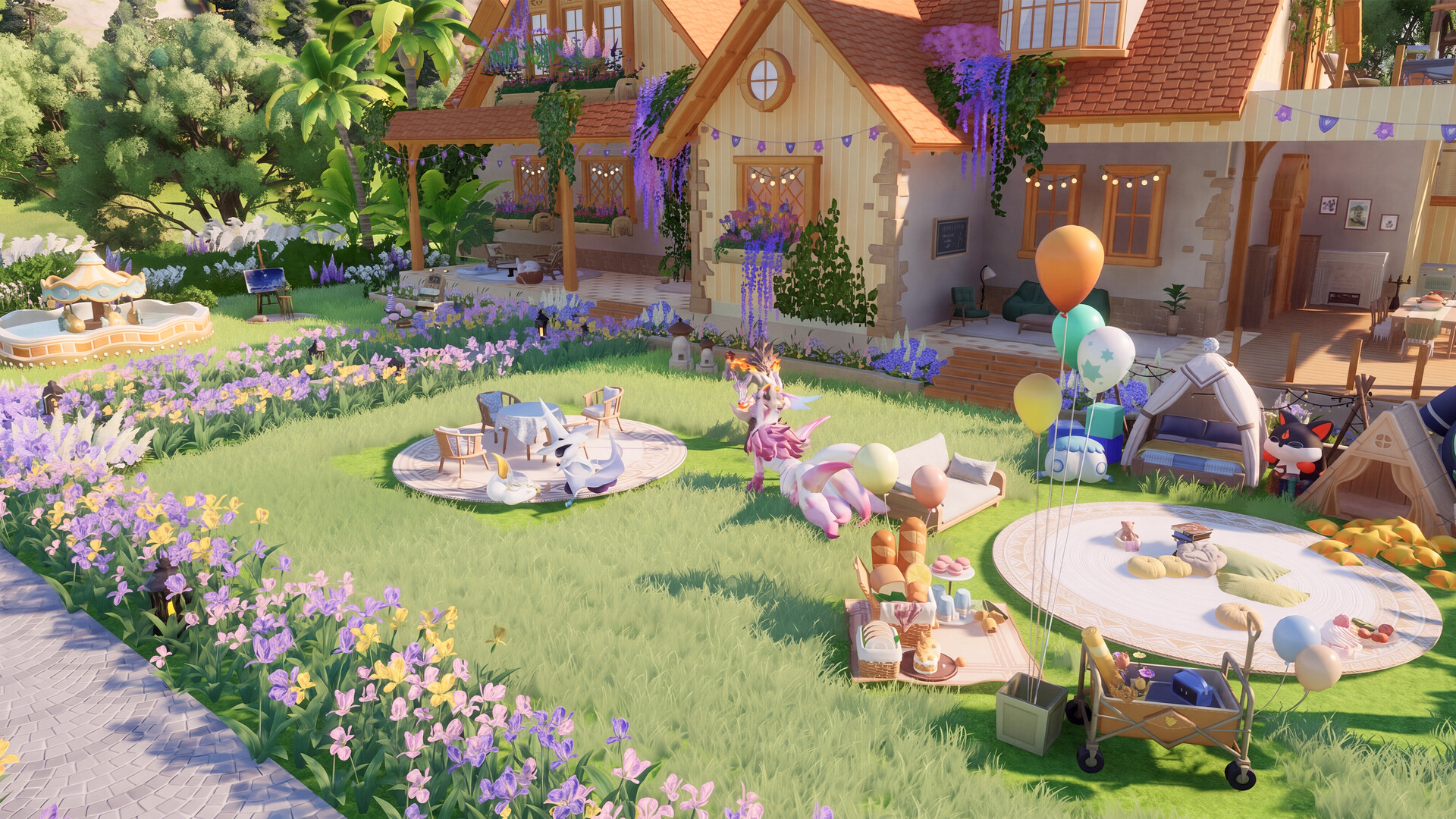
The first thing that becomes apparent, usually within the opening hour, is that Aniimo refuses to let its environments settle into background noise. A meadow you pass through early on is rendered with enough specificity, enough small variation in terrain and lighting and creature behavior, that it registers as an actual place rather than a texture wrapped around an invisible corridor. That alone would not be remarkable. Plenty of games render pretty environments that players still ignore within twenty minutes, because prettiness and meaning are not the same thing. What makes the difference in Aniimo is that the game consistently rewards the player for treating a location as something worth re-examining, rather than something to be crossed off.
This shows up most clearly in how creatures are woven into the terrain rather than dropped onto it. A creature that first appears sleeping under a rock formation is not simply relocated there for visual variety. Its presence there, its behavior when approached, and the way it reacts to time of day or nearby weather all suggest that the game has a coherent idea of what that creature is and how it lives, even if the player never reads a single line of accompanying lore text. This matters because it changes the psychological framing of exploration. You are not searching a level for spawn points. You are trying to understand a small ecosystem well enough to predict what it might show you next. That distinction sounds subtle on paper, but it is the difference between a checklist and an investigation, and Aniimo consistently leans toward the latter.
The day-and-night cycle is where this idea becomes impossible to miss. A lot of games include a day-night system purely as an aesthetic flourish, something that changes the color of the sky without meaningfully altering what the player can do. Aniimo uses it as a lever on the world's behavior. A field that feels calm and unremarkable at noon can feel entirely different once the light starts to fade, not because the geometry has changed but because different creatures become active, different sounds start to layer into the ambience, and the sense of what might be encountered there shifts along with it. A day-and-night cycle only becomes meaningful when it changes what the player expects from the world. If returning to the same location at a different hour can produce a different encounter or alter the way an area is approached, time stops being background decoration and becomes part of exploration itself. That is exactly what happens here. The player learns, without being told directly, that a location is never fully "done." It has moods, and those moods are worth checking in on.
This is also where the emotional tone of the game separates itself from typical genre entries. Because the world resists being fully catalogued in a single pass, there is a persistent, low-level sense of things left unfinished, not in a frustrating way but in the way a familiar neighborhood always has one street you have never walked down. The game is patient about revealing this. It does not flash a marker over every unexplored patch of grass to signal "something is here." Instead, it trusts the player's attention, betting that a genuinely well-built space will draw the eye toward its own secrets without needing to shout about them. That trust pays off more often than not, and when it does, the resulting discovery feels earned in a way that map-marker-driven exploration rarely manages.
Creatures as Keys, Not Trophies
The most common failure mode in this genre is treating every creature as an interchangeable unit of progress. Catch it, log it, move on. The number in the corner of the screen goes up, and that upward motion is meant to be its own reward. Aniimo does something more interesting by tying creatures directly to the player's ability to understand and move through the world, which means that catching one is rarely just about the catching. It is about what that creature unlocks in terms of perception, access, or interaction with everything around it.
A creature discovered in one area can eventually change how the player approaches another location, giving previously familiar environments a different purpose. A path that seemed like a dead end early in the game might reveal itself as accessible only once a particular creature's ability lets the player interact with an obstacle that was always there but never solvable. This is a familiar structural idea in adventure game design, the classic notion of gated progression through acquired tools, but Aniimo applies it in a way that feels organic rather than puzzle-boxy, because the "tool" is a living thing the player has formed a relationship with rather than an item pulled from an inventory slot. The creature does not feel like a key shaped explicitly to fit a lock. It feels like a companion whose nature happens to open a door, which is a small distinction but an important one for how attached the player becomes to the process.
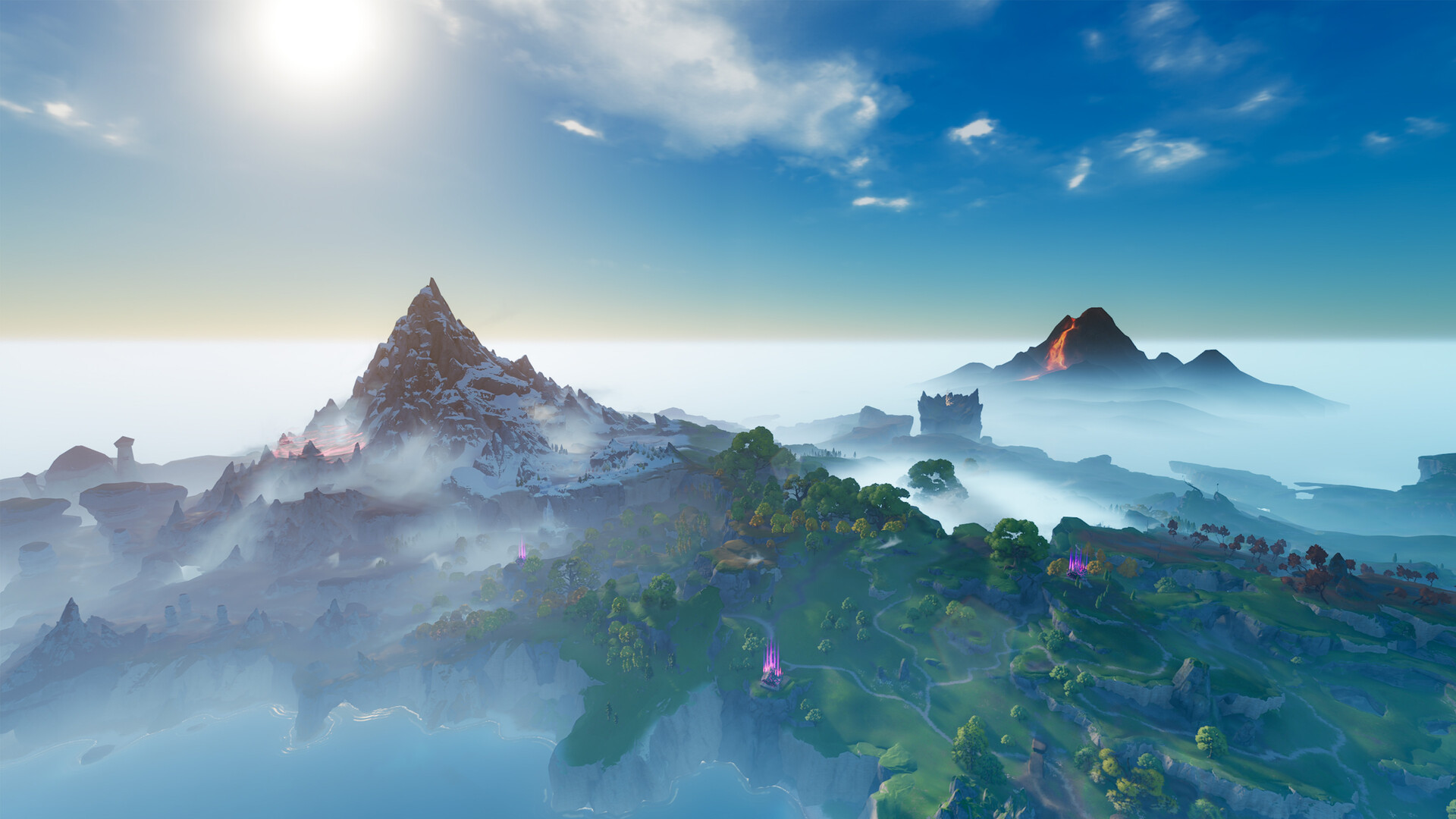
That connection between discovery and re-contextualized space is where the phrase "learning how the world works" earns its keep. Exploration in Aniimo is cumulative in a way that a lot of open-world design only pretends to be. In many games, cumulative exploration just means the map fills in with icons as you travel. Here, it means your actual understanding of the world's internal logic deepens, and that understanding changes what you notice and where you choose to go next. The homeland base, the player's central hub, illustrates this well. Early visits to it feel like a simple checkpoint, a place to rest and organize before heading back out. As more creatures are gathered and as their behaviors and relationships with each other become apparent, the homeland starts to feel less like a menu screen with a nice backdrop and more like a living space that reflects the player's progress in a tangible, visible way. Creatures interact with each other there, sometimes in ways that hint at compatibility or personality that the field encounters only suggested. Watching that unfold gives the sense that catching was never the endpoint. It was an introduction.
The bonding mechanic built around Twine reinforces this same idea from a different angle. Twine is not framed as a currency to spend or a stat to grind. It functions more like a relationship variable, something that grows through repeated interaction and shared experience rather than a single transactional moment. This has a quiet but real effect on how players treat their creatures. A team assembled purely for combat efficiency, chosen by looking up a tier list and slotting in whichever numbers are highest, treats the roster as disposable inventory. A team assembled through the kind of gradual trust that Twine encourages treats the roster as a group of individuals the player has actually spent time with. The mechanical depth of Twine matters less here than its psychological effect: it makes the difference between "I own forty creatures" and "I know these six creatures," and the second framing is far more durable as a source of engagement, because it does not run out once the numbers stop climbing.
Combat That Remembers It Is Not the Point
It would be easy for a game this focused on world and relationship to treat its combat system as an afterthought, something included because the genre demands it rather than because it adds anything. Aniimo avoids that trap, but it does so by keeping combat in its proper place within the larger structure rather than trying to make it the star. Fights exist primarily as a consequence of exploration and relationship, not as a separate minigame bolted onto the side of the experience. A battle against a wild creature in its own territory carries a different weight than a battle staged in an arena, because the terrain, the time of day, and the creature's established behavior all inform what that encounter is actually about. Winning a fight in Aniimo often feels less like defeating an enemy and more like successfully navigating an encounter with an established resident of a place you are still learning to understand, which loops the combat back into the discovery-driven framing that defines everything else.
Evolution mechanics extend that same philosophy. A creature that changes form after reaching a certain point in its relationship with the player, or after specific conditions tied to the world are met, reinforces the idea that growth in this game is relational rather than purely statistical. It is not simply that a number crosses a threshold and a new sprite appears. It is that the creature's development is legible as part of an ongoing story between player and creature, one shaped by where they have been together and what they have done. This does not mean the systems are shallow. There is real strategic depth in how teams are composed and how encounters are approached, particularly once the multiplayer layer introduces other players' teams into the equation and forces a kind of adaptive thinking that solo exploration does not require. But even there, the game resists collapsing into pure optimization. Because the roster is built around individual creatures with individual histories rather than fungible stat blocks, min-maxing never fully replaces the sense that this is still, underneath the numbers, about the relationships that got you here.
The Cost of Making a World Worth Trusting
None of this comes free, and it would be dishonest to treat Aniimo as a flawless execution of its own ambitions. A game built around the idea that its world rewards close attention only works if that attention is consistently repaid, and there are stretches, particularly in some of the later regions, where the density of interesting detail thins out and the exploration starts to feel more like the genre standard it is trying to avoid. When that happens, the seams show. A field that has nothing meaningfully different to offer at night compared to day breaks the implicit promise the earlier hours established, and once a player has been trained to look closely, an area that turns out to have nothing worth finding reads as a letdown rather than a neutral non-event. The game is, in other words, a victim of its own successful pacing in its first half, because it sets a bar for environmental richness that is not maintained with total consistency all the way through.
There is also a pacing tension between the game's patient, relationship-driven design and the more conventional progression pressures that any game with a leveling system and a wider metagame will eventually introduce. As the multiplayer and competitive layers become more relevant, there is a pull toward treating creatures instrumentally again, picking teams for effectiveness rather than for the bond built with them over the course of exploration. Aniimo does not fully resolve this tension. It coexists with it, sometimes gracefully and sometimes less so, and players who lean hard into the competitive side may find that the quieter, discovery-first mode of engagement the early game cultivates gets crowded out. This is not necessarily a design failure so much as an honest reflection of a genre that has to serve multiple kinds of players at once, but it is worth naming, because a review that only praised the exploration loop without acknowledging where it strains against the game's other systems would be giving an incomplete picture.
The bonding system, for all its emotional intelligence, can also feel slow in ways that occasionally undercut its own goals. Building a meaningful relationship with a creature takes time, which is exactly the point, but the game does not always do enough to make the intermediate stages of that process feel eventful. There are periods where a creature's Twine is visibly growing but nothing about the moment-to-moment experience of playing with that creature has changed yet, and during those stretches the mechanic can feel more like a background timer than an active part of the relationship it is meant to represent. A system built on patience needs to occasionally reward that patience with something the player can feel, not just something they can see on a meter, and Aniimo does not always manage that balance.
What Aniimo Actually Understands About Its Own Genre
Despite these rough edges, what makes Aniimo worth talking about is not that it perfects the creature-collection formula but that it clearly understands what that formula usually gets wrong, and it makes a genuine, sustained effort to correct for it rather than simply decorating the same structure with prettier art. The genre's oldest and most persistent problem is that exploration and collection tend to become mechanical the moment a player understands the underlying pattern generating them. Once you know a tall grass patch is just a random encounter table, walking through it stops being exploration and starts being a chore performed for statistical reasons. Aniimo's answer to that problem is not to hide the mechanics better. It is to build enough genuine variation, behavioral logic, and long-term consequence into its world that understanding the pattern does not immediately drain the meaning out of engaging with it. Knowing that a creature is nocturnal does not make finding it at night feel less satisfying. If anything, it makes the discovery feel like the payoff of accumulated knowledge rather than luck, which is a much more durable source of satisfaction over the dozens of hours a game like this asks for.
This is ultimately what separates a game that merely contains an interesting world from a game that is actually about the experience of getting to know one. The creatures in Aniimo are not simply attractive designs arranged across a map to be collected in sequence. They are treated, with reasonable consistency, as evidence of a coherent place, and the player's growing familiarity with that place is treated as something worth building an entire progression system around. That is a genuinely different design philosophy from the collect-them-all model most of the genre still runs on, even when the surface-level trappings, the starter choices, the type matchups, the evolution animations, look similar enough at a glance to invite easy comparison.
Whether that philosophy fully justifies the length of the game, or whether the softer patches in its later regions undercut the trust it works so hard to establish early on, is a fair question, and not one with an entirely comfortable answer. But the fact that those are the questions worth asking about Aniimo, rather than simply whether it has enough creatures or a satisfying enough combat loop, says something meaningful about what it set out to do. It wanted exploration to be the reward rather than a means to a reward, and for most of its runtime, in the fields and forests and half-lit corners where its best ideas live, it manages exactly that.